The Top 10 Tips For Testing Equipment For PAT in Warwick
In the UK The selection, use and maintenance of testing devices is the basis of any effective and compatible Portable Appliance Testing programme. It is vital to understand that the technical proficiency of a technician is vital but the instruments used for testing' quality, calibration and application are also crucial. Equipment must be able to conduct the electrical tests as that are required by the IET Code of Practice for the In-Service Testing and Inspection of Electrical Equipment. This code is the industry standard for best practices. Each tool, from sophisticated portable appliance test to a simple voltage gauge, is essential in verifying electrical equipment safety. Understanding the capabilities and limitations of the instrument along with the legal requirements, is vital for anyone who wants to ensure that their testing program is technically sound and legally defensible.
1. Portable Appliance Tester Itself in Warwick
It is the principal instrument, an automatic device specifically designed to carry out safety tests. Modern testers vary from basic models that perform earth continuity, insulation resistance, and lead polarity tests to more advanced models that offer additional tests such as load/run current, earth leakage, and touch current. The ability to run a soft test or substitute leakage of sensitive electronic devices (e.g. printers, computers) that may be damaged by high voltage when conducting the test for insulation resistance is a crucial feature. The tester you choose to use must be in line with the complexity of the appliance to be tested.
2. Annual calibrations are required by UKAS accredited laboratories. in Warwick
This is a requirement to be in compliance. The United Kingdom Accreditation Service, or UKAS will be able to verify that the PAT tester is regularly calibrated at least once per year, by reputable laboratories. The calibration ensures that the measurements of the tester are accurate and traceable back to the standards of the nation. The provider must possess a valid calibration certificate for every tester they employ. Using an uncalibrated or out-of-calibration instrument renders all tests invalid and gives no defense in the event of an accident.
3. Users Tests and Functionality Checks (Daily/Pre Use)
Before the testing process can begin technicians must conduct an annual function check. This type of check can be called an "user's test" or a "verification". It usually involves testing an existing "proof load" or a set of test leads. The tester should be maintained and calibrated if it does not perform the test required for the item that is known to be good. This simple check is an essential best practice to make sure that the equipment is functioning correctly on the day of use.
4. The purpose of visual inspection equipment in Warwick
While often neglected Instruments that enable an accurate visual inspection are just as crucial as electronic testers. These tools include screwdrivers to dismantle plugs, labels or pre-printed labels to identify the asset, and an inspection light to illuminate dark areas. This step is vital to identify any faults.
5. Specialised Test Leads & adapters in Warwick
A skilled technician will have an array of adaptors which interface with all kinds of outlets for appliances. This includes the standard UK 3-pin plug leads IEC led adaptors(for testing the appliance-end of detachable cables) as well as a clamshell/croc clip lead for testing equipment with no plug (e.g. industrial machinery), and specialist adaptorsfor commando connectors for shaver sockets, or IEC 60309 connectors. If the connectors aren't properly connected it could mean that the test is conducted incorrectly or skipped altogether.
6. Earth Bond Test Led and its importance for Class I Equipment
Earth bond testing is essential for the Class I appliances that require an earth circuit to ensure safety. Test leads for Class I appliances (those requiring an earth) require high current capacities (5-25A in most cases) to ensure that the connection is secure. A lead that is not of high quality or not appropriate for the test may result in a false "pass" reading. This could pose the risk of a serious safety hazard. Technicians must be aware of the importance of selecting the right lead for the test.
7. Insulation resistance testing and voltage Parameters
The test of insulation resistance uses an extremely very high DC voltage (typically 500V for the majority of appliances) between earth and live conductors to determine the strength of the insulation. Technicians must be able to determine the right time and place to not perform this test. For instance, for equipment equipped with surge protectors (or sensitive electronic components) it is recommended to use a different leakage test is safer. The device must provide the correct test voltage specified in the IET code of practice.
8. The instrument's presets and Pass/Fail Criteria in Warwick
Testers of good standing include built-in criteria for passing or failing according to the limits set in the IET Code. (e.g. Earth bond resistance 0.1O+R, Insulation resistance >1MO). Transparency demands that the technician be aware of these limits and does not arbitrarily alter them to make them pass. The service provider must confirm that the equipment it uses is set in accordance with industry standards for consistent results.
9. Capabilities for Reporting and Data Management in Warwick
Modern PAT testers are equipped with data loggers. They can store hundreds, or even thousands, of test results. The information can be transferred to software in order to create certificates, asset records, and failures reports. This feature will be utilized by a transparent provider to provide transparent and precise evidence of work performed. Recording on paper is not an industry standard and could be susceptible to errors and falsification as well as loss.
10. Secondary Verification Equipment Voltage Indicators and GS38 in Warwick
A skilled technician would use PAT tests as the primary instrument, but they also carry an additional voltage indicator, or voltstick to confirm that electrical connections are in good condition before touching them, especially when replacing plugs or investigating problems. The second device must be in compliance with the HSE Guideline Note GS38 that defines the requirements for design (e.g. finger guards and probes that are insulated). This will add an important layer of safety for the person who is performing the testing. Take a look at the recommended electrical equipment testing in Warwick for blog recommendations including extinguisher service, testing a fire extinguisher, fire service fire extinguisher, fire extinguisher, fire electrical extinguisher, extinguisher fire extinguisher, electrical extinguisher, fire extinguisher fire, fire extinguisher inspections, electrical extinguisher and more..

Ten Tips To Cost Transparency In Fire Extinguisher Service in Warwick
Cost transparency in the provision of fire extinguisher services concerns risk management and regulatory compliance, and not merely comparing prices. The UK regulatory framework governed strictly by the Regulatory Reform Order, 2005 could result in unexpected obligations and substantial compliance gaps. An honest quote is a precise blueprint that proves the service provider's compliance with British Standards. It also shows their business practices and commitment to ethical practices. Hidden fees and inconsistent replacement policies, as well as vague line items in quotations, are not just financial concerns. They also signify the possibility of a decrease in service quality. Transparency in costs is essential for an informed decision to be made, which balances budgetary restrictions with the requirements of the law on fire.
1. The breakdown of costs for service visits: labor components, consumables and parts in Warwick
A clear and transparent estimate will detail the costs for every service. An estimate for a regular service should be able to separate the labor costs of the engineer (his time spent on site), the replacement parts (e.g. new seals and labels) and the consumables. A breakdown of the costs will demonstrate that the provider has not been cutting corners. Examples include reuse of old seals or not working properly to charge units. This allows for providers to be compared fairly, since a headline price that is low may not include these elements.
2. Pricing Model Clarity: All-Inclusive vs. Pay-As-You-Go
The quote must clearly define the pricing method being employed. A fixed-price contract (or all-inclusive) will have a fixed-price fee per year that includes labor, parts and refills. It should not include hidden extras. Contrary to this, the Time-and Materials arrangement or Pay As You Go will be charged a lower service fee at first but then will raise it substantially when more services become due. Transparency can help you avoid budget shocks years later and better understand the financial risk.
3. Costs of Extended Service (5-year and 10-year)
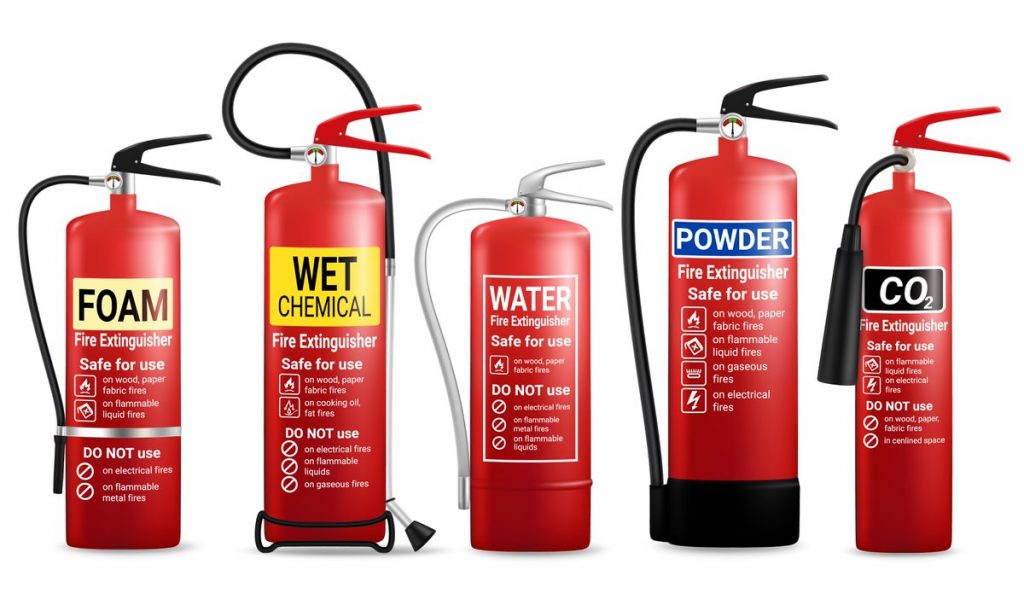
Most of the cost surprises occur when you have to increase the duration of your services. A transparent company will not hide these future costs. The quotation will include an estimate or a price list that details the costs for the extended 5-year maintenance (for foam, water, and powder extinguishers) and a 10-year overhaul that includes a pressure test of CO2 extinguishers. The quote will contain an explicit price list or schedule which will estimate the cost of a 5-year extended services (for water, foam, and powder) and 10 years of overhaul and pressure test (for CO2) for every type of extinguisher you have.
4. Equipment Replacement and Condemnation Policies in Warwick
In this area, transparency is essential. The quote should specify the policy of the service provider and any associated costs when replacing extinguishers that are beyond repair. This includes situations like corrosion major damage, outdated models. Will the company offer an exchange of the same model? What would the cost be? If the item that was previously used is returned, is there a discount? Inconsistency in this area could indicate that the company utilizes equipment condemnation in order to charge unexpectedly high replacement costs, thereby holding you in a bind.
5. Additional and Hidden Fees: Call-Outs, Mileage fees and Admin in Warwick
Be sure to check the fine print of the quotation. Most reputable companies will disclose these upfront. You should be able determine the following the following: Mileage (after the requisite distance), Emergency Call Out fees (and the amount they will are outside of normal business hours) Administration Fees (for processing documents or certificates) and Parking/Congestion Fees (particularly when you are within city centers). If the price seems to be too high it could be because the expenses aren't included.
6. The Quote Validation Period, Price Guarantee and the Time Limit Conditions in Warwick
Professional quotes will clearly specify the period of validity (30-90 days is common), which safeguards you from price increases that may be incurred after you have decided to sign the contract. In addition, for contracts that are longer-term it must specify the conditions of any price guarantee. The annual cost for the length of the contract be set? Will it increase annually according to a recognized index such as CPI? or is it subject to a discretionary annual review? Transparent terms prevent disagreements and provide certainty in the budget.
7. Differentiated Pricing Based on Type of Extinguisher and Size in Warwick
The cost of maintaining an extinguisher is largely contingent on its type and size. A transparent quote is not a blanket price. It will give you the cost per unit. For example it could differentiate between an extinguisher for CO2 that weighs 2kg and a wet chemical unit of 6 litres. This gives a more precise and reasonable estimate of your inventory and actual work, as opposed an averaged estimation that could overcharge for basic units.
8. Documentation and Certificate Fees in Warwick
A legal certificate of compliance has to be issued. The cost of creating, storing, and issuing this crucial document must be included in the cost. This will not be listed as a line item on an unambiguous quote or added as an "admin charge" in the invoice. If the service provider is charging extra to prove compliance, it is a sign that they are not being truthful.
9. Payment Terms Schedule in Warwick
Terms for payment that are simple and reasonable are the mark of a reliable provider. Quotes should include details including the time frame of the invoice (e.g. quarterly, annually), the accepted payment methods, and the net terms (e.g. 30 days after the invoice date). Additionally, it should be stated if the payment is due in advance or at the time of the conclusion. Avoid providers that demand full payment before the service has even been executed.
10. Comparison Framework to Compare Competing Quotes in Warwick
When you have true transparency, you are able to evaluate things similar to one another. This is not possible by presenting a vague estimate. It is crucial that service providers offer a thorough and itemised breakdown, which lets you evaluate the costs of servicing a 2-kg CO2 Extinguisher from Company A with Company B. It should include the cost for each year's service, along with the estimated cost to test the CO2 extinguisher in 10 years as well as its replacement cost. Without this level of detail the client is in a battle of apples and oranges and the lowest initial price is often the most expensive long-term partner, with potentially severe risks to safety and compliance. See the best fire extinguisher maintenance in Warwick for more recommendations including fire electrical extinguisher, fire extinguisher fire extinguisher, fire extinguisher using, fire service, extinguisher inspections, fire and extinguisher, extinguisher service, extinguisher inspections, electrical fire, fire extinguisher fire and more. More broadly, have a look at the top emergency light testing for more.